About five thousand people are still buried under Denver's prettiest park, and the reason they are still there is a newspaper story from 1893. What is under the grass, and what anything here costs.
Cheesman Park was the city cemetery
The ground between Franklin and High Streets held Denver's first public burial ground from the city's earliest years. It was closed in 1890, the land was wanted for a park, and the graves were supposed to be emptied first. Families who could afford to move their own dead did so. The rest - the poor, the unclaimed, the people with nobody left to ask - were left to the city to deal with, and that is where it went wrong.
Paid by the box
In early 1893 the city contracted the undertaker Edward McGovern to disinter and move the remaining bodies for $1.90 each. He was supplied with, and used, child-sized caskets - about one foot by three and a half. A body does not fit in one. So bodies were cut apart and distributed across two or three boxes, each of which was billed for. Bones and remains lay open across the site, and people came to take souvenirs from the opened graves.
The city's response was to stop
The Denver Republican published it on 19 March 1893 under the headline The Work of Ghouls. Faced with the scandal, the city did not order the work redone properly - it halted the removals and built the park on top of what was left. Something on the order of five thousand people were never moved. They are under the lawn now, under the pavilion and the paths and the people having lunch, and there is no marker over any of them.
What else the tours cover
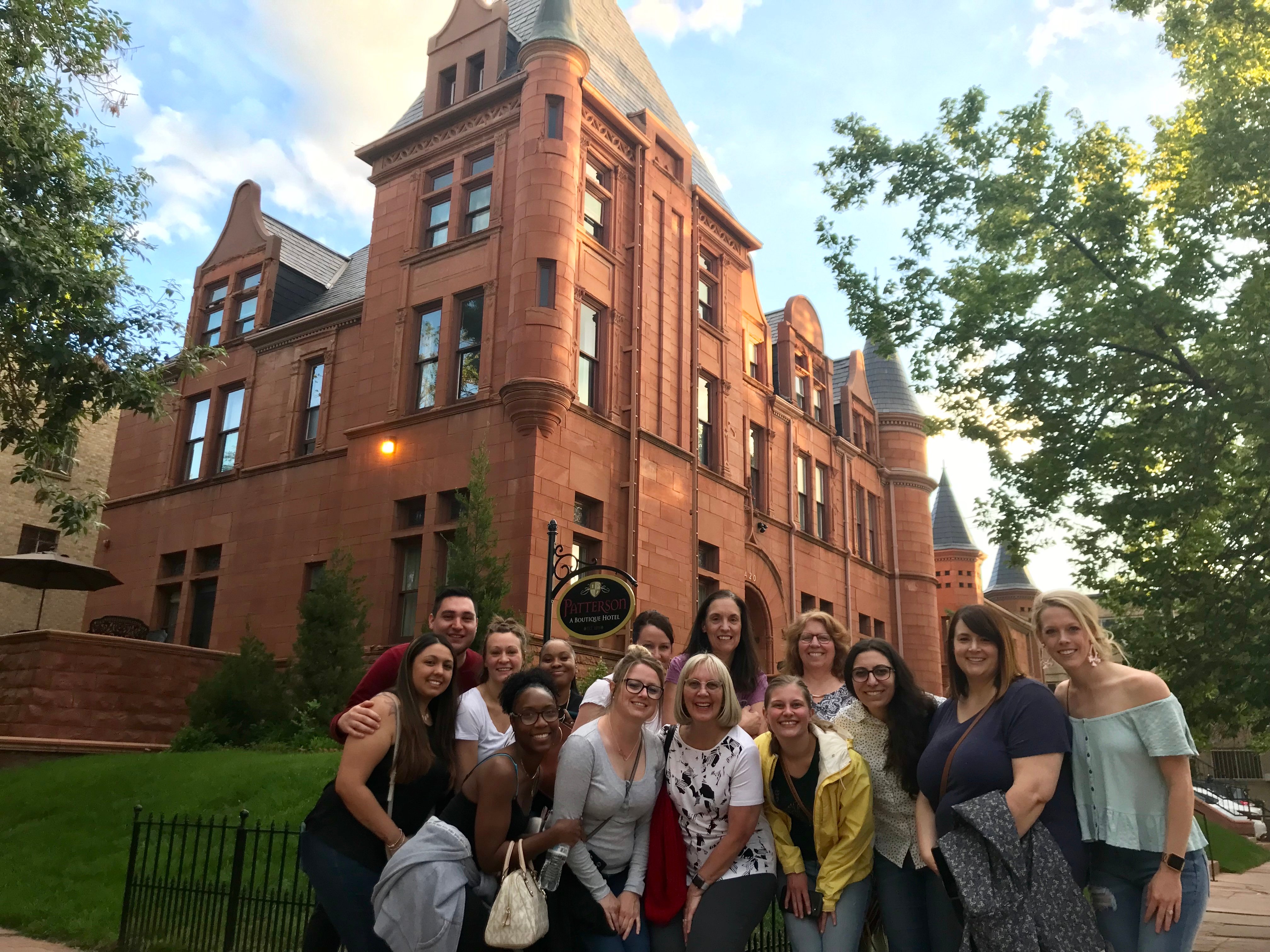
The Molly Brown House and the Brown Palace hotel downtown carry the city's other well-known stories, and both are the ordinary kind - a house museum with a ticket, and a working hotel with an open lobby and no access above it. The Croke-Patterson mansion turns up on every list and is private property. None of them is in the same category as the park, which is the only site in Denver where the disturbing part is a matter of public record rather than anecdote.
Free, paid, and what a tour is for
Cheesman Park is a public park: free, open, and the best thing on this list by a distance. The Molly Brown House charges. The Brown Palace lobby is free to walk into. So a Denver ghost tour is narration over open ground, and the test of a good one is whether it tells you about the contract and the boxes, which is documented, or sticks to noises in a hotel corridor, which is not.
That sits in the typical band for the category, whose median is $30.
Denver ghost tours
5 of the 5 Denver tours we track
. Ordered by review depth.
What is the most haunted place in Denver, Colorado?
Cheesman Park, and it is not close. The park was built on Denver's first city cemetery, and when the 1893 removal contract collapsed in scandal the city stopped the work and built over what remained - roughly five thousand people were never moved and are still under the grass. It is free, open, and unmarked. Every other site in the city is a story; this one is a record.
What are Denver's best kept secrets?
That the lawn at Cheesman Park is a cemetery. Most people using it have no idea, because nothing on the site says so - the burials were abandoned mid-removal in 1893 after a newspaper exposed how the contractor was being paid, and the park went up over them. The pavilion, the paths and the lawn all sit on ground that was never cleared.
What happened at Cheesman Park in 1893?
The city hired the undertaker Edward McGovern to move the remaining bodies out of the old city cemetery at $1.90 per body. He used child-sized caskets roughly one foot by three and a half, which meant cutting bodies apart and billing for two or three boxes each. Remains were left scattered and looted. The Denver Republican published it on 19 March 1893; the city halted the removals and built the park regardless.
What's the scariest haunted house in Colorado?
That question is usually about seasonal haunted-house attractions, which run around Denver in October with actors and built sets and are a different product from a ghost tour. If you mean a real building, the Stanley Hotel in Estes Park is the state's famous one and is about ninety minutes from Denver. In the city itself the substantial site is a park, not a house.
Is Cheesman Park free?
Yes - it is a Denver city park, open and free at all times, and walking it costs nothing. There is no visitor centre, no interpretation and no memorial to the people still buried there. The Denver Botanic Gardens next door charges admission and sits on land connected to the same former cemetery.
 1 hour